
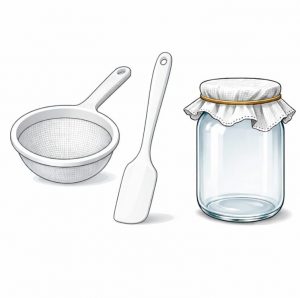
The Tools needed for making Tibetan Kefir:
———————————————————————————————————-
Tibetan Kefir – a Living Fermented Drink Rich in Natural Probiotics
Tibetan kefir is not just another type of kefir and certainly not an ordinary fermented product. It is a living culture with deep roots in tradition, valued for its natural origin, active composition, and positive effect on overall wellbeing.
It is made using Tibetan kefir grains – a natural symbiosis of beneficial bacteria and yeasts. During fermentation, they create a fresh, living kefir, naturally rich in active cultures, including naturally occurring probiotics.This is not a product that simply sits on a shelf.
It is a drink that lives, matures, and works for your body every day.
A Long Tradition Based on Real Experience
For centuries, Tibetan kefir grains have been used in regions where people relied on simple yet effective nutrition. Kefir was prepared daily at home and valued as part of everyday life, helping to support digestion, inner balance, and overall strength.
This tradition has survived not because of trends, but because it is based on a natural, living process that delivers real results.
What Makes Tibetan Kefir Different?
Unlike most store-bought kefir, Tibetan kefir:
is made through natural fermentation
retains live bacteria and yeasts
contains no thickeners, stabilisers, or preservatives
offers a much wider diversity of active cultures
Commercial kefir is usually produced using only a few bacterial strains. Tibetan kefir, however, may contain dozens of different microorganisms, making it richer in live cultures and probiotics.
Active Composition and Benefits for the Body
Tibetan kefir is valued for its living, active composition, which:
helps maintain a healthy balance of gut microflora
supports digestion and nutrient absorption
contributes to normal immune system function
helps the body recover after stress or medication
The naturally formed probiotics work together, supporting the body in a balanced and gentle way.
Many people notice:
- a feeling of lightness
- improved overall wellbeing
- increased energy
- positive changes in skin condition linked to better gut health
- Naturally Occurring Vitamins and Minerals
During fermentation, Tibetan kefir naturally develops:
- B-group vitamins
- Vitamin K
- Calcium
- Magnesium
- Phosphorus
- Amino acids
- Natural enzymes
These nutrients are easily absorbed, as the fermentation process makes them more bioavailable.
Why Keep Tibetan Kefir Grains at Home?
✔ You make fresh kefir yourself
✔ You control the ingredients
✔ The drink is always fresh and alive
✔ A natural daily source of probiotics
✔ The grains multiply and last for a long time
This is not a one-time purchase, but a long-term solution for everyday nutrition.
How to Make Tibetan Kefir at Home
You will need:
Tibetan kefir grains
Milk (cow’s or goat’s)
A glass jar
A plastic or wooden strainer
Metal utensils are not recommended.
Preparation Process
Place into a glass jar:
1 tablespoon of kefir grains
About 250ml of milk
Cover loosely (do not seal tightly).
Leave to ferment at room temperature (around 20–25 °C).
After 12–24 hours:
Strain the kefir
The drink is ready to consume
Add fresh milk to the grains and repeat the process
Grain Growth and Care
Tibetan kefir grains are alive, so with regular use they naturally grow and multiply.
If you make kefir daily, you will usually notice an increase in grain quantity after 5–7 days. This is a sign that the culture is healthy and active.
When there are too many grains:
separate a portion
keep only the amount needed for daily use
What to Do with Extra Grains?
Share them with family or friends.
Store in the fridge with milk for short breaks (up to 5–7 days).
Freeze for long-term storage – up to 3 months is recommended.
After thawing, the grains may need a few fermentation cycles to fully regain their activity.
How to Consume
Start with 100–150 ml per day
Consume regularly
Listen to your body’s response
🥛 Tibetan Milk Kefir Grains
Complete Guide to Care, Growing, and Storage (Including Freezing)
Tibetan milk kefir grains are a living symbiotic culture of bacteria and yeasts. They love stability, cleanliness, and regular care. Below is a complete step-by-step guide, starting from scratch, if you have received 7 grams of fresh kefir grains and want to grow them properly.
1️⃣ Getting Started (Day One)
If the grains are:
white or creamy in colour
moist
with a pleasant, fresh sour-milk smell
— they are alive and ready to use.
First step
Gently rinse the grains with cold or slightly warm water
Use your hands, do not rub or squeeze
Never use boiling water, baking soda, vinegar, or detergents
2️⃣ First Fermentation
Since the amount of grains is small, it’s important not to overload them with milk.
Starter ratio:
7 g kefir grains
200–250 ml milk
Milk should be:
cow’s milk
pasteurised (not ultra-pasteurised / UHT)
2.5–3.2% fat is ideal
Fermentation setup
Use a glass jar
Do not close with a lid
Cover with gauze or a breathable cloth
Keep at 20–24°C (68–75°F)
Away from direct sunlight
3️⃣ Daily Care Routine
This is the foundation of healthy kefir grains.
⏱ Fermentation time
Standard: 24 hours
Optional: 12 hours (milder taste, less acidity — especially good in summer)
🔁 Each cycle includes 3 steps
Step 1 — Straining
Pour the kefir through a plastic or stainless-steel strainer
Gently help the liquid pass through with a spoon
The grains remain in the strainer
Step 2 — Rinsing the Grains
Rinse the grains every time
Use cold or room-temperature water
Handle gently, without pressure
Healthy grains are:
firm and elastic
white or cream-coloured
not slimy
free of unpleasant odours
Step 3 — Fresh Milk
Return the grains to a clean jar and add fresh milk.
Ratios:
7 g → 200–250 ml
15 g → 400–500 ml
30 g → 1 litre
📌 General rule: 1 tablespoon of grains per 0.5 litre of milk
4️⃣ Grain Growth
First 3–5 days: adaptation period
After 7–10 days: visible growth
Extra grains can be:
shared
stored
frozen
5️⃣ What Kefir Grains Do NOT Like
❌ Metal contact
❌ Hot water
❌ Airtight jars
❌ Long exposure to cold
❌ Lactose-free milk
❌ Ultra-pasteurised (UHT) milk
6️⃣ Short Break (Refrigerator Storage)
Rinse the grains
Cover with fresh milk
Store in the refrigerator
Change the milk every 2–3 days
❄️ Freezing Tibetan Milk Kefir Grains
Freezing is a safe way to store kefir grains for 3–6 months.
🥇 Option 1 (Recommended): Freezing Partially Dried Grains
Preparation
Strain and rinse the grains
Shake off excess water
Spread them on a clean plate or paper towel
Drying
12–24 hours
Room temperature
Not in direct sunlight
Not near a heater
The grains should be:
dry on the outside
still soft inside
Freezing
Divide into portions
Place in zip-lock bags
Remove as much air as possible
Freeze at –18°C (0°F)
Storage time:
ideal — up to 3 months
acceptable — up to 6 months
🥈 Option 2: Freezing Fresh (Wet) Grains
This method is quicker but requires longer recovery after thawing.
How to do it
Rinse the grains
Gently pat dry with a paper towel
Portion into small bags
Freeze at –18°C
🔄 Thawing and Reactivation
Thaw only at room temperature
Never use hot water or a microwave
After thawing:
rinse the grains
add 200 ml of fresh milk
Important
Do not drink the first batch
The second batch is usually fine
Full recovery takes 2–4 days
🌱 Signs of Healthy Kefir Grains
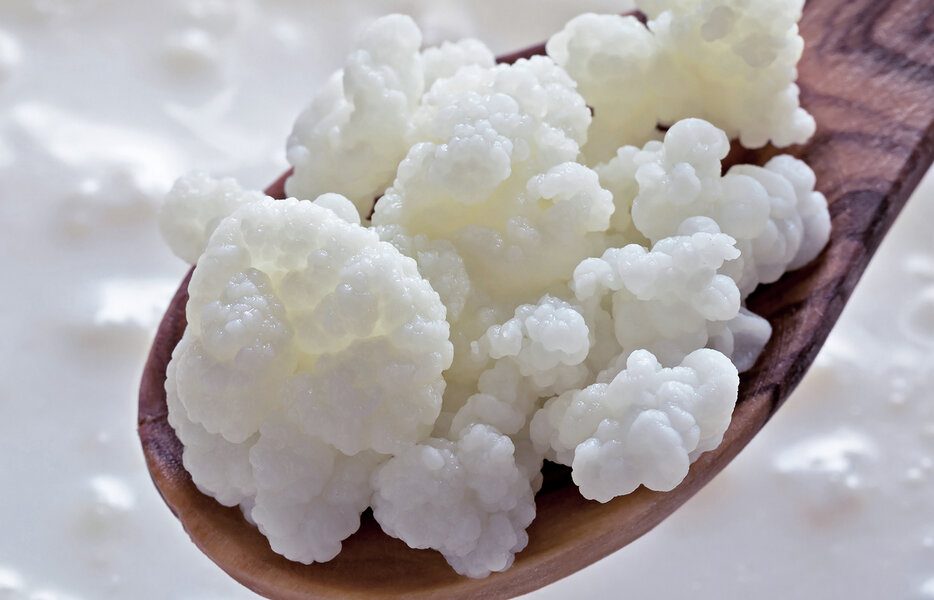
✔ White, cauliflower-like appearance
✔ Firm texture
✔ Pleasant aroma
✔ Milk ferments quickly
Summary
Tibetan kefir is a living, natural, fermented drink, made at home and rich in active cultures and natural probiotics. No chemicals, no unnecessary processing, no compromises.
A choice for those who value real, living food for their body.
Reviews
There are no reviews yet.